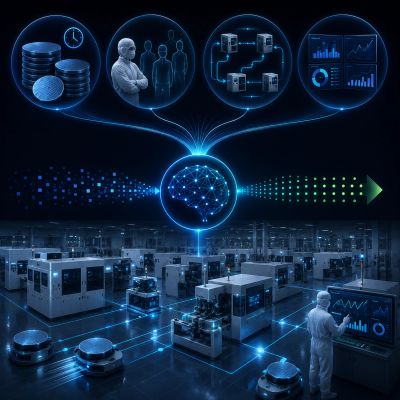
Learning-based dispatching systems for mid-sized semiconductor fabs that transform operational experience into scalable manufacturing intelligence
Why Machine Learning Matters
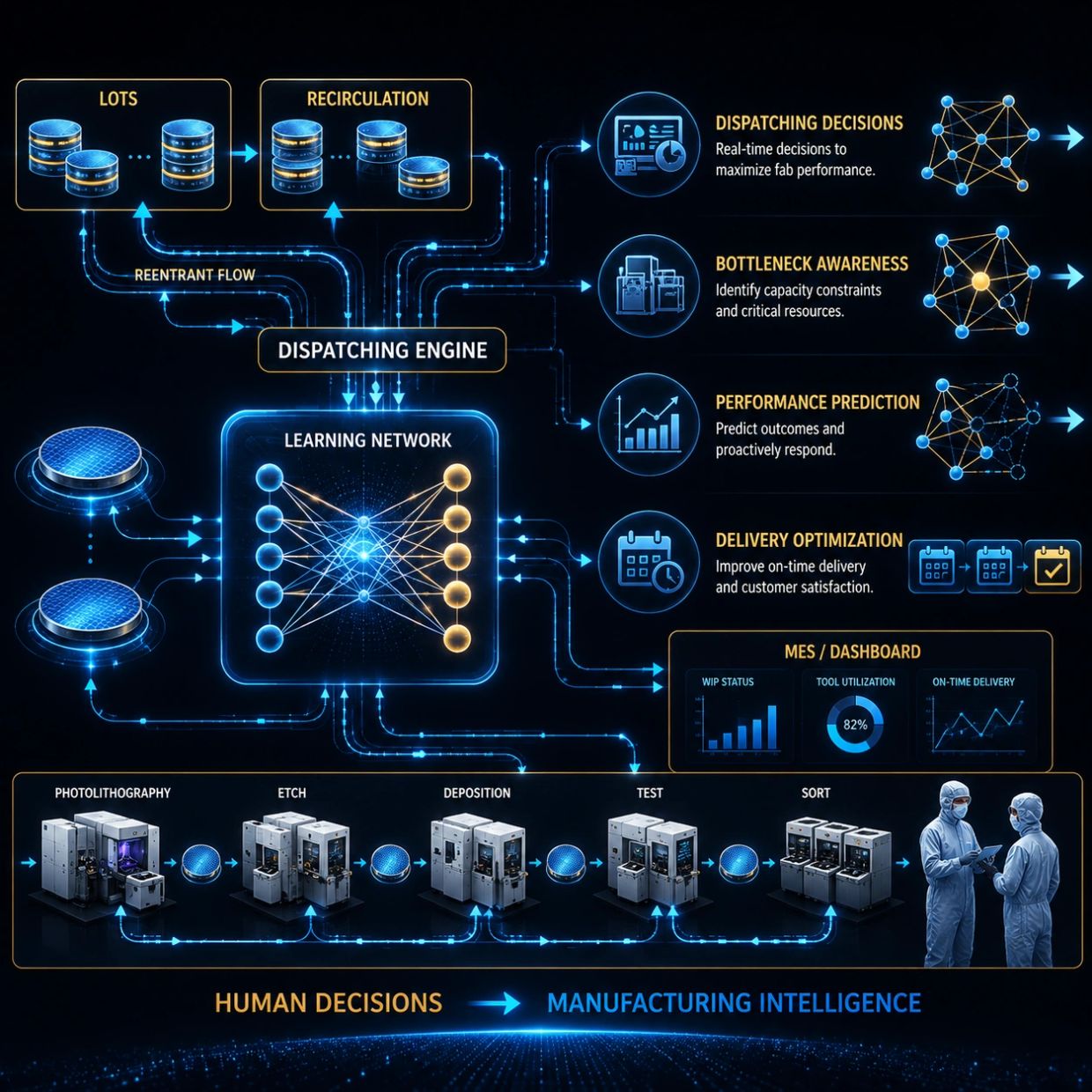
Traditional manufacturing systems rely on predefined rules and manually engineered logic.
While effective for stable environments, many critical decisions inside semiconductor fabs are shaped by operational experience rather than explicit rules.
Machine learning enables a different approach: learning from historical decisions and outcomes to uncover patterns that are difficult to encode manually.
The goal is not to replace existing workflows, but to transform tacit operational knowledge into scalable manufacturing intelligence.
Semiconductor Manufacturing Reality

Where Complexity, Capacity, and Delivery Commitments Converge
Modern semiconductor fabs operate under constant pressure to maximize output, maintain delivery commitments, and efficiently utilize critical equipment.
Production lots continuously compete for limited capacity across highly dynamic manufacturing environments characterized by reentrant flows, bottlenecks, process constraints, and changing priorities.
Many of the decisions required to manage this complexity depend on operational experience developed over years on the shop floor.
As complexity grows, the ability to transform manufacturing experience into scalable intelligence becomes a strategic advantage.
The Challenge
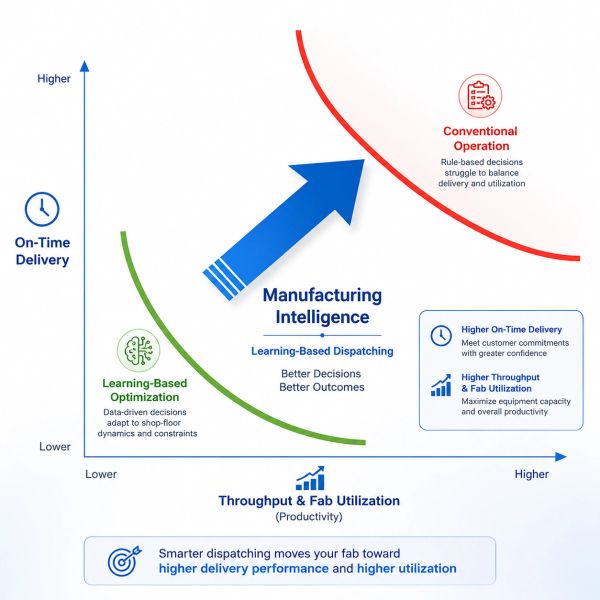
Manufacturing Intelligence Starts with Dispatching
Every production lot competes for limited equipment capacity across highly dynamic manufacturing environments.
Dispatching decisions influence cycle time, delivery performance, bottleneck utilization, and overall fab productivity.
Small improvements in dispatching decisions can translate into significant gains in throughput, delivery confidence, and profitability.
How We Do It
From Human Expertise to Scalable Intelligence
From Human Expertise to Scalable Intelligence
From Human Expertise to Scalable Intelligence
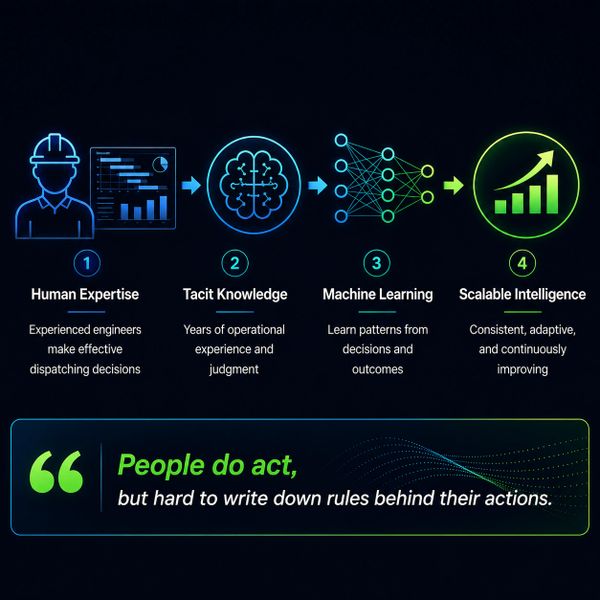
Experienced engineers often make effective dispatching decisions without explicitly describing every rule behind them.
Their decisions reflect years of accumulated operational knowledge, balancing delivery commitments, bottlenecks, equipment availability, and production dynamics.
Machine learning makes it possible to learn from these decision patterns and transform expertise into scalable manufacturing intelligence.
Hybrid Decision Intelligence
From Human Expertise to Scalable Intelligence
From Human Expertise to Scalable Intelligence
Rule-based systems provide structure and operational discipline.
Machine learning contributes adaptability and pattern recognition.
Together they create a practical path toward intelligent manufacturing operations.
Benefits
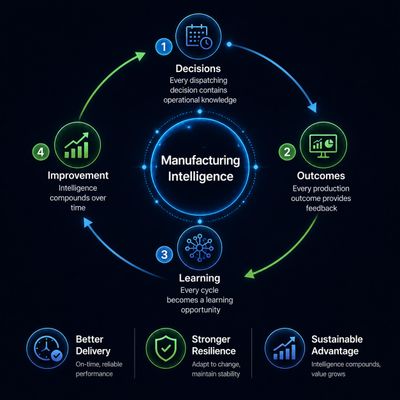
A Strategic, Self-Improving Competitive Advantage
Every dispatching decision contains operational knowledge.
Every production outcome provides feedback.
Every manufacturing cycle becomes a learning opportunity.
Over time, manufacturing intelligence compounds, strengthening delivery performance, operational resilience, and competitive advantage.
Why Now
Smart Manufacturing Is No Longer Optional
- Growing delivery pressure
- Workforce shortages
- Increasing process complexity
- Faster market response requirements
The question is no longer whether manufacturing intelligence is needed.
The question is how quickly fabs can begin learning from their own operational knowledge.